| The lens choice locked on set has always required a translator in post. CG inserts, FX comps, and matte paintings all eventually run into the same wall: matching the optical fingerprint of real glass on a real sensor. ZEISS just shipped a Nuke plugin built on a ray-traced engine of authentic optical physics that closes that gap in a single click. For anyone who has fought to seat a CG asset, an FX element, or a digital double inside a hero plate, the math just changed. | This week: ZEISS rebuilds optical physics inside Nuke, Unity drops an in-editor AI assistant in open beta with MCP support, and Voxel School argues that production-pipeline rehearsal beats portfolio-first art-school training. | |  | | Tools | ZEISS Just Built a Digital Lens Factory Inside Nuke | ZEISS has launched CinCraft LensCore, a Nuke plugin built on what the company calls Virtual Lens Technology. At its core is a GPU-accelerated, ray-traced rendering engine that simulates authentic optical behavior across every pixel and every frame: bokeh, defocus, distortion, vignetting, and focus fall-off, all derived from the physics of real glass rather than from approximated post filters. Artists load lens profiles from a digital shelf, either ZEISS cinema lenses or custom presets, and a complete digital lens look is applied with a single click. A built-in inpaint feature fills occluded areas behind defocused objects, reducing the need for complex 3D setups. Beyond replicating existing optics, the plugin lets artists generate new, never-before-seen lenses that still behave with the physics of authentic glass. CinCraft LensCore is being demonstrated at FMX 2026 in Stuttgart. The craft implication is direct: the distance between a DoP's on-set glass choice and the final comp has always been one of the messier handoffs in the pipeline, managed through lens data sheets, reference charts, and hard-won compositor intuition. A tool that speaks the same optical language as the physical lens, parameterized by focus, T-stop, focal length, and focus distance, removes that translation layer. The manual setup that previously consumed hours per sequence becomes a repeatable, versioned workflow. That matters most on shows where lens consistency across units or second-unit plates is a constant negotiation. Read the full breakdown on Pro Video Coalition → | "LensCore speaks the same language as the lenses on set, from the way light falls off at the edges of the frame to the nuance of out-of-focus highlights." | | The briefs |  | Tech · 80.lv An Hour of Real-World Unreal GPU Profiling on an RTX 3060 Reveals Where Nanite Foliage Burns Your Frame Budget Developer Tom Looman profiled indie game Far Far West using Unreal Insights on an RTX 3060, targeting broad GPU compatibility. His breakdown zeroes in on Nanite foliage with masked materials and pixel depth offset enabled as the primary frame-time culprit, costing as much as 2ms per frame on its own. If you are authoring foliage for any Unreal-based production or real-time project, disabling pixel depth offset on masked Nanite materials is the first optimization to verify before you push a build. |
|  | Tools · 80.lv Unity AI Goes Open Beta With Built-In Agent, MCP Connector, and Free Access on Pro Licenses Unity has shipped Unity AI in open beta, an in-editor assistant that operates in Ask, Agent, and Plan modes and can answer questions, generate code, create assets and scenes from prompts, and execute actions inside the project. It connects out to external tools through an AI Gateway and an MCP server. Pro, Enterprise, and Industry license holders get access included; Personal Edition is $10 per month. Unity also stated that by default user data is used only to provide the service, not for model training. For any team running Unity-based real-time, broadcast, or virtual-production pipelines, this is the first AI assistant from Unity itself worth installing and pressure-testing this week. |
|  | Training · 80.lv Voxel School Reframes Art-School Training as Continuous Pipeline Rehearsal, Not a Portfolio-First Sprint In an 80.lv interview, Voxel School director Jose Cuesta explains the school's bet that employability is not a graduation milestone but a thread woven through every term, with curriculum structured around studio workflows, feedback loops, and the kind of cross-discipline collaboration that defines real production. The argument: portfolios get a graduate to a first interview, but professional mindset (listening, defending decisions, working within constraints, contributing in multidisciplinary teams) is what keeps the second offer coming. For studios scoping junior pipelines or for senior artists asked to mentor, it is a useful reference for what production-ready should actually mean by 2026. |
| India desk |  | Production · Animation Xpress VAM Summit 2026 Frames India's Streaming Economics as an Algorithm Problem, Not a Creative One The sixth edition of The Content Hub x VAM Summit, convening 14-15 May in Mumbai with over 150 speakers and 2,000 attendees, has structured its entire agenda around a single uncomfortable question: when algorithms rather than legacy relationships decide what wins, how does the industry rebuild its decision-making logic from scratch? Sessions cover AI in production workflows, the economics of theatrical versus OTT, branded content as cultural co-creation, and the scaling of regional-language content from national phenomenon to global export. For VFX houses with Indian broadcast or streaming clients, the discussions around AI-powered workflows and the push for micro-drama formats will directly shape brief volumes and budget structures over the next 12 months. |
|  | Industry · Animation Xpress Roblox Names Sunil Rao Its First India MD as the Platform Doubles Down on a $1.5B Creator Economy Roblox, the platform whose global creator community earned over $1.5 billion in 2025, has appointed Sunil Rao as its first managing director for India, with Rao starting in May. His remit covers strengthening local market presence, building strategic partnerships, and growing the creator ecosystem, with safety and regulatory alignment named as top priorities. For 3D artists, animators, and small studio leads in the region, the move is a concrete signal that platform-side commissioning and creator-monetisation budgets are about to scale alongside the existing OTT and broadcast pipelines. |
| 1k open VFX roles on the platform Filter by craft, studio, country, or salary. Updated daily. |
| ▸ Jobs this week |  | Mocap Animator - mid Squeeze Studio · Montreal, Canada · 1d ago | Apply → |
|  | Lighting Supervisor Industrial Light & Magic · Mumbai, India · 1d ago | Apply → |
|
| ▸ Featured reel | 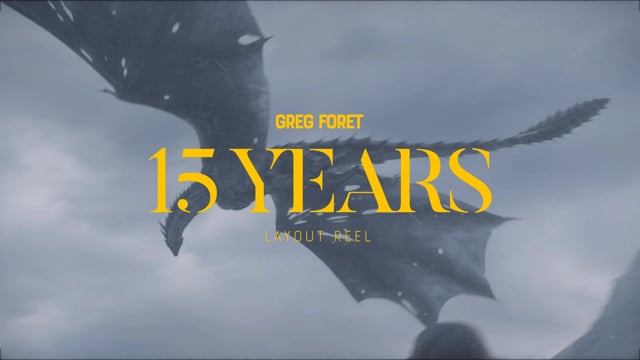 | Greg Layout artist, 15+ years on animation and VFX features, now mentoring at top schools. |
|
| ▸ The Pulse - VFX Engine, this week | 39 new VFX jobs this week | 1k open roles right now | 37 reels & resumes audited | Digital Domain top hiring studio (7 roles) |
|
| Closing thought The pieces this week sit at three points of the same arc. ZEISS encodes decades of optical physics into a Nuke plugin that runs in one click. Unity puts an AI assistant inside the editor that writes code, generates assets, and reaches out to external tools through MCP. And Voxel School argues that the constant in all of this, the artist who decides what to do with the click, is precisely what training has to keep pace with. Each layer of the pipeline keeps shedding manual labor, but the judgment about what to ship has not been automated, and is unlikely to be. What this actually means for the working artist is not that the craft is getting simpler. It is that the bar for what counts as "baseline quality" keeps moving upward, and the studios that will feel it first are the ones still pricing bids as if that baseline is fixed. Reply with the one tool or technique that you wish you had learned two years earlier, and I will pull a thread from those responses for a future issue. | Priyank Murarka Founder, VFX Engine. | | How was this issue? Loved itIt was OKMeh |
|