|
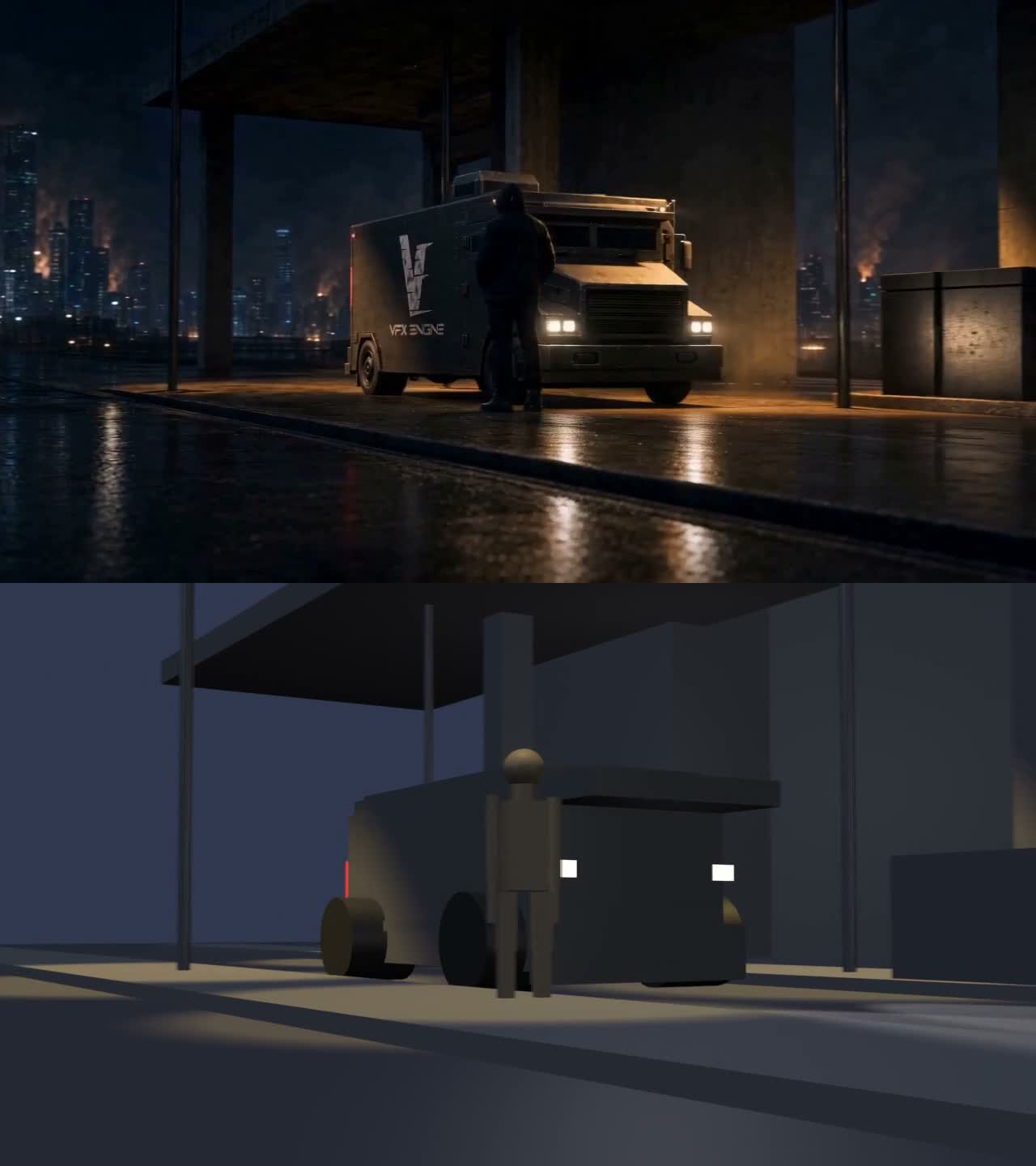 | The breakdown Gray Blockout In, AI Repaint Out: a Pipeline Test The same frame twice. We blocked out an armored truck driving past a bystander under a night viaduct in Nuke's 3D system, then ran an AI pass over it. This is a pipeline test, not a finished shot: VFX Engine's generative tools running natively inside the Nuke node graph. |
|
When a high-profile series needs to recreate eighteenth-century Savannah on a Scottish shoot budget, the solution is rarely a heavy, fully modeled CG asset. BlueBolt's work on the final season of Outlander shows how combining 2D live-action plates, 2.5D projections, and precise volumetric smoke can bypass the overhead of full 3D environments. It is a masterclass in keeping the pipeline light without losing scale. |
This week: our own Nuke-to-Seedance armored-truck breakdown, BlueBolt's 2.5D environment and fire workflow for Outlander, and the physics behind Independence Day's White House miniature explosion. |
|
 |
| Production |
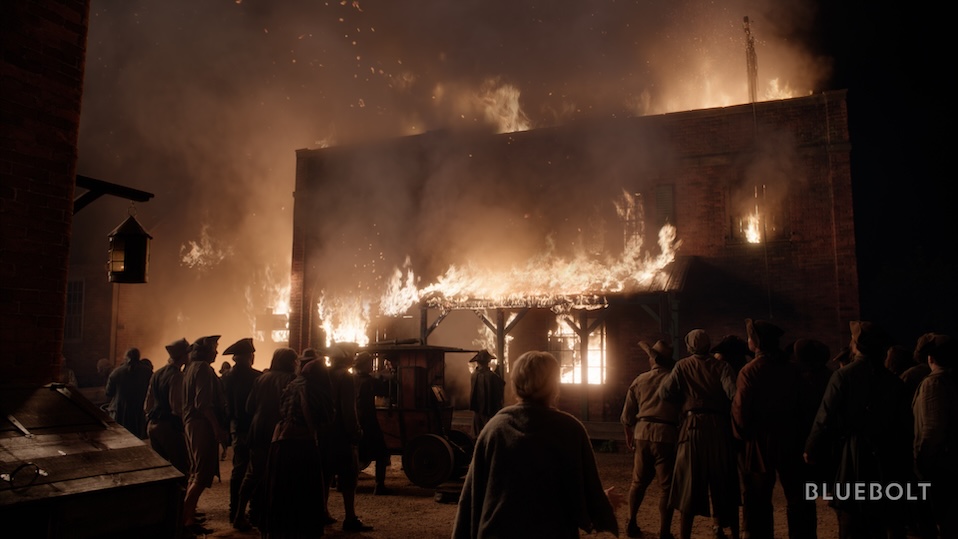
How BlueBolt Combined 2.5D Rooftops and Volumetric Smoke to Deliver Outlander’s Final Season |
BlueBolt delivered 160 visual effects shots for the eighth and final season of Outlander, transforming Scotland and Derbyshire locations into the American settlement of Savannah, Georgia. The primary challenge was a print shop fire scene: rather than relying solely on heavy simulations, the team layered specifically filmed 2D fire and destruction elements with volumetric CG FX smoke, shooting the rooftop sequence against bluescreen with a 2.5D environment built from location photography. The Take: TV budgets and schedules cannot support the heavy iteration cycles of fully simulated 3D environments across wide-angle sequences. BlueBolt's reliance on 2.5D projections for the rooftops and composited 2D live-action elements for the fire demonstrates how to maintain cinematic quality on a broadcast schedule. By limiting full volumetric simulations to the supporting smoke, the team minimized render overhead while keeping physical continuity with the live-action plates. Read the full breakdown on Televisual → |
"TV budgets cannot afford heavy, fully simulated 3D environments. Combining 2.5D digital matte paintings with real 2D fire elements bypasses render bottlenecks while preserving physical realism." |
|
The briefs |
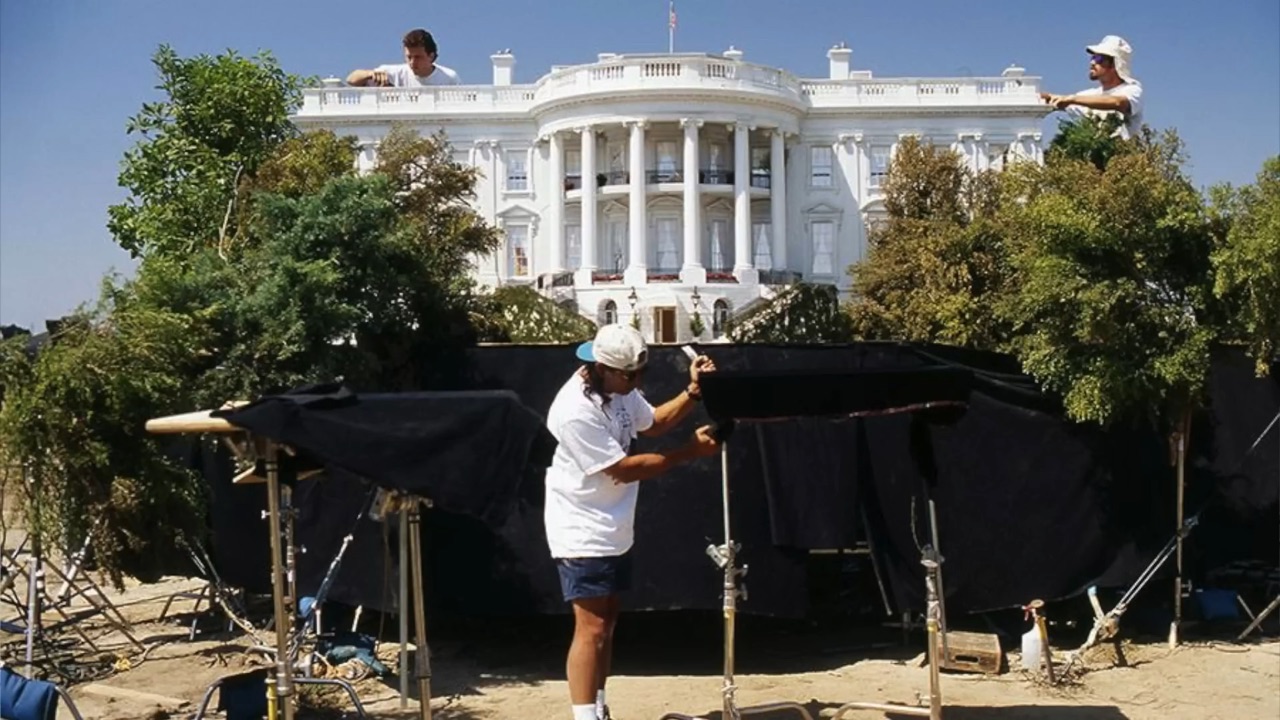 Production · Befores & Afters The Chaotic Physics Behind Independence Day’s Iconic 14-Foot White House Explosion Visual effects supervisor Volker Engel and miniatures supervisor Douglas Smith recently broke down the construction of the 1/12th scale, 14-foot White House miniature shot at 500 frames per second. The team had to re-rig and pack the pyrotechnic charges more loosely for the second take to capture the ideal slow-motion structural collapse, and got it clean on the first try. If you are simulating digital destruction today, this is still the ultimate reference for how physical scale and slow-motion frame rates interact in real-world pyrotechnics. |
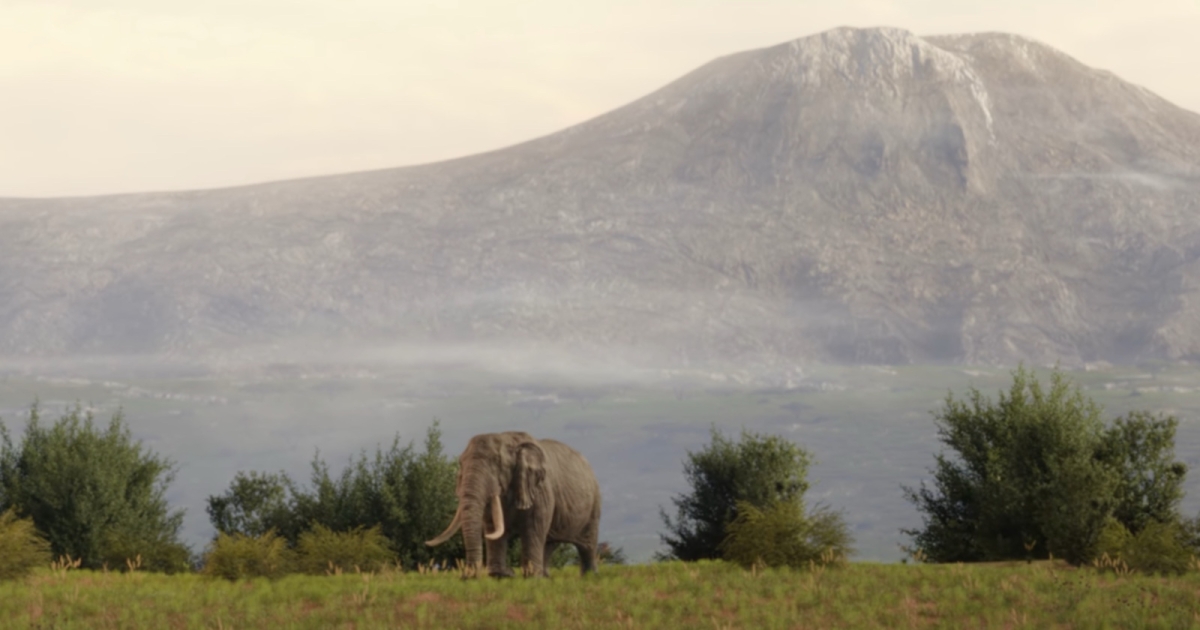 Tools · 80.lv Re-creating Kenya’s Amboseli National Park Using Gaea Heightmaps and Fusion Nodes Artist Yash Jain reconstructed real vacation footage in Blender by splitting the landscape into foreground, midground, and background layers, then matched the camera move using low-opacity reference footage, generated terrain erosion in Gaea from real heightmap data, and composited the result in DaVinci Resolve's Fusion. If you still lean on After Effects for 3D integration, a node-based compositor is worth the switch. |
842 open VFX roles on the platform Filter by craft, studio, country, or salary. Updated daily. |
| ▸ Jobs this week |  | Assistant Technical Director (ATD) Framestore · London, United Kingdom | Apply → |
|  | Unreal CFX Artist Sony Pictures Imageworks · Vancouver, Canada | Apply → |
|
| ▸ Featured reel | 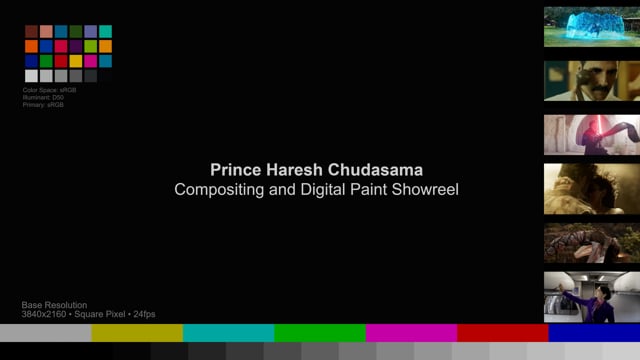 | Prince Haresh Chudasama Film and episodic VFX artist since 2019, specializing in 2D/3D compositing, digital cleanup, rotoscoping, and beauty work for feature films and streaming series. |
|
| ▸ The Pulse: VFX Engine, this week | 842 open VFX roles | 971 resumes audited | 268 artist reels live |
|
|
Closing thought The pattern this week: adaptability beats brute-force budgets. BlueBolt shipped TV environments on schedule with 2.5D over full 3D; the White House miniature team got a massive destruction gag right on the first take. Reply with the optimization that saved you the most render time this year. |
Priyank Murarka Founder, VFX Engine. |
|
How was this issue? Loved itIt was OKMeh |
