|
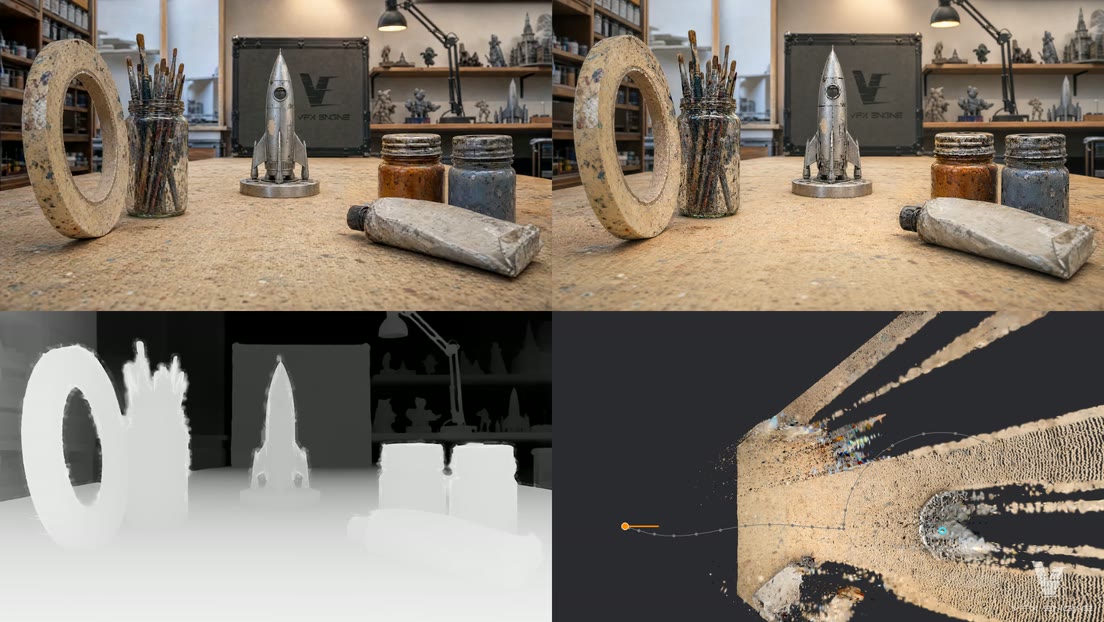 | The breakdown One Flat Photo In, a 140° Camera Orbit Out One still of a miniature rocket on a workbench. We built a gaussian splat from that single photo inside Nuke's 3D system, hand-animated a camera wrapping 140 degrees around the bench, and rendered the move as pure depth. That depth drive plus the original frame went through an AI pass that invented everything the photo never saw, including the far side of the rocket. This is what we are building: VFX Engine's generative tools running natively inside the Nuke node graph. The shot is on LinkedIn. |
|
SDR stock assets and clipped client plates are the quiet killers of high-dynamic-range compositing budgets, forcing artists into hours of manual curve-matching. A new deep-learning Nuke plugin wants to automate this bottleneck by predicting lost highlight and shadow data frame by frame. This shift signals a broader move where utility AI steps in to fix structural pipeline fragmentation. |
This week: our own gaussian-splat camera move built from a single photo in Nuke, Beeble brings automated SDR-to-HDR reconstruction to Nuke, and Indian studios pivot from outsourcing to global co-productions. |
|
 |
| Tech |
Your HDR VFX Pipeline No Longer Needs Manual SDR Matching |
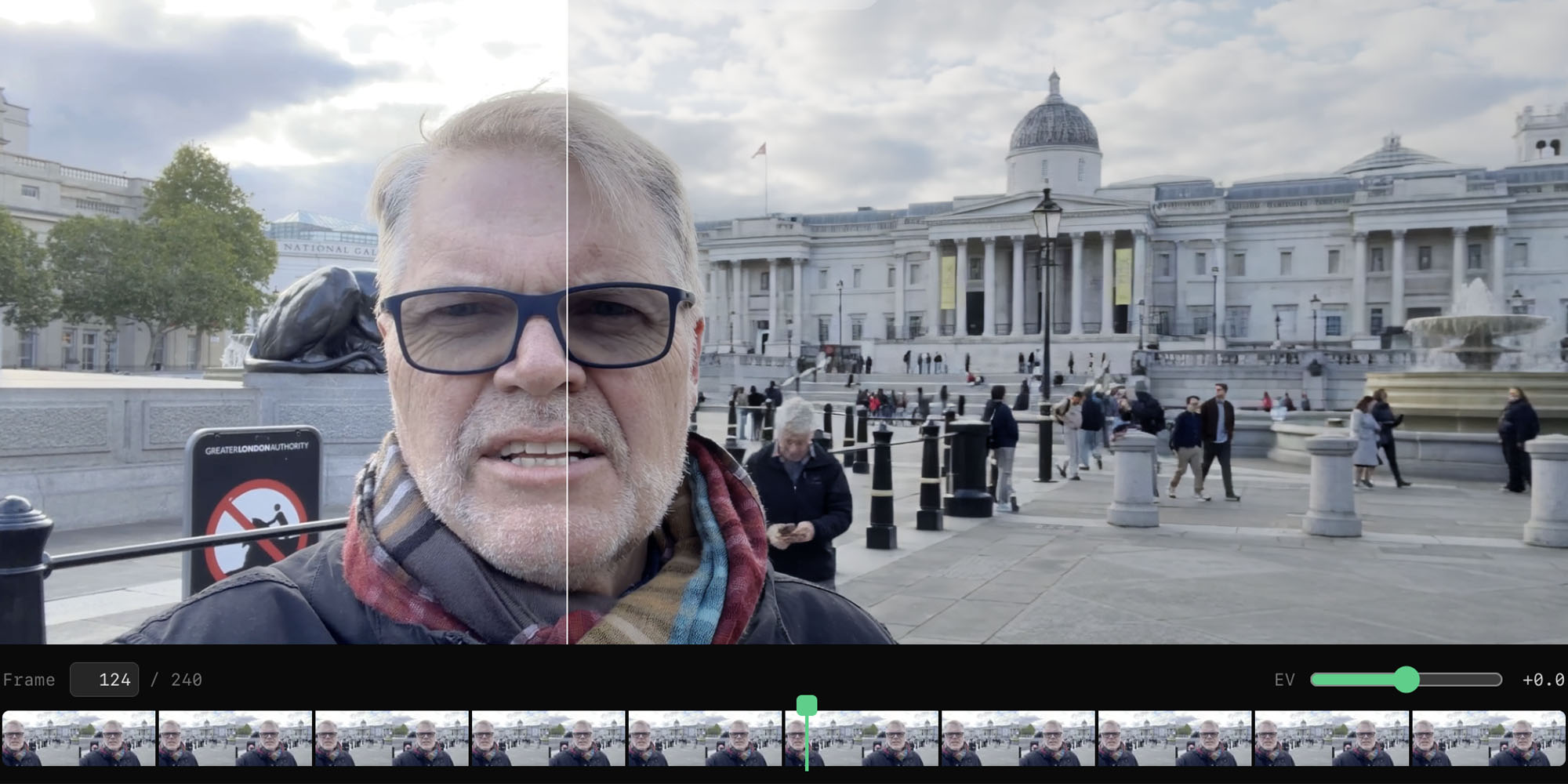
Beeble has released the beta of SwitchHDR, an AI-powered Nuke plugin designed to automatically reconstruct HDR data from SDR video. In modern production pipelines, integrating stock footage or late-delivered client plates that suffer from clipped highlights or crushed blacks often requires labor-intensive manual curve matching. This deep learning model is trained on matched SDR and HDR pairs, enabling it to intelligently infer and restore lost highlight and shadow details frame by frame rather than simply stretching the dynamic range. The Take: For decades, compositors have had to manually tone-map and grade low-dynamic-range assets to sit believably in high-dynamic-range scenes. By shifting this workflow to deep-learning inference, Beeble targets a persistent and costly bottleneck in the finishing process. The immediate benefit is not just a reduction in manual artist hours, but absolute consistency across color space handoffs, ensuring background plates and stock assets behave predictably under final cinematic grades. Read the full breakdown on fxguide.com → |
"Reconstructing HDR from SDR is notoriously difficult because SDR video often loses information crucial for HDR: highlights are flattened to white and shadows are crushed into pure black." |
|
The briefs |
Tech · arxiv.org Causal 3D Scenes Can Now Be Reconstructed from a Single Stereo Pair Researchers have developed StereoSplat+, a diffusion-enhanced feed-forward framework that generates high-quality 3D Gaussian Splatting scenes from just one stereo observation. By combining a 3D volume branch with a progressive one-shot diffusion inference loop, the system refines and updates scene geometry even in heavily occluded regions. If you are developing real-time interactive layouts or on-device environments, this approach removes the traditional requirement for dense multi-view source footage. |
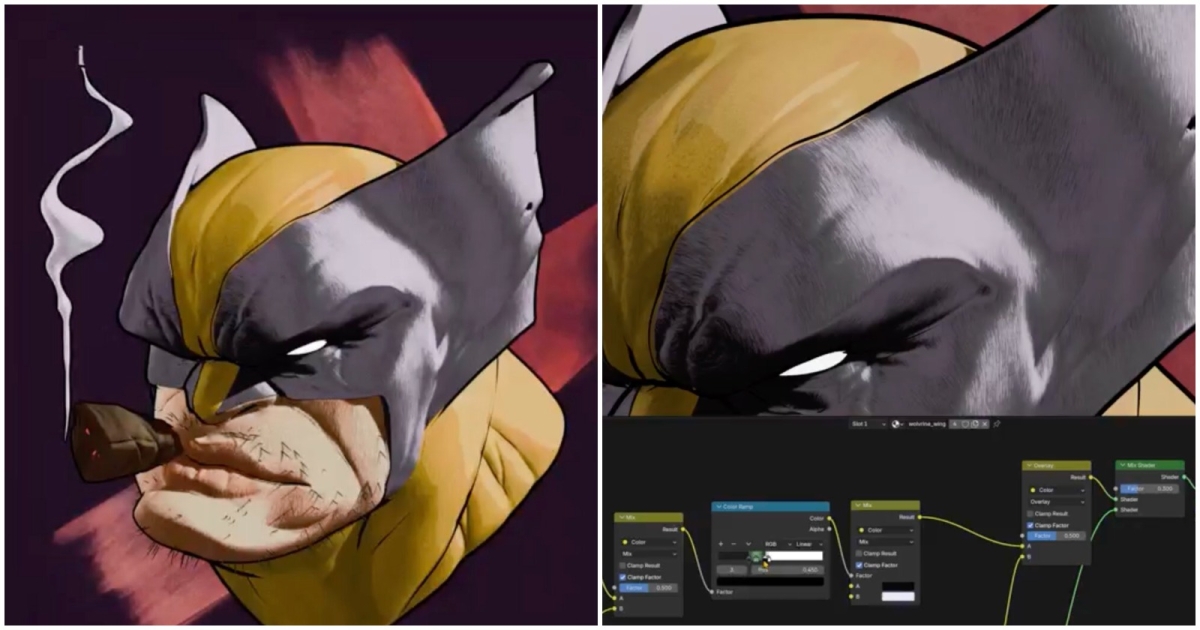 Tools · 80.lv Blender Shader Workflow Delivers Graphic Comic Book Aesthetics in 3D Artist Tian Jin, in collaboration with Vincent Ménier, recreated Marvel's Wolverine using custom Blender shaders to achieve a high-contrast graphic toon aesthetic. The setup leverages geometry outlines and stylized shadow rendering to match traditional comic book ink-and-paint styles. If you are look-deving stylized animated features or game assets, this technique demonstrates how to bypass traditional 2D hand-drawn limitations directly in your 3D viewport. |
Tech · reddit.com Unreal Engine 5.8 Upgrades Augmented Reality Tools to Production Standards Unreal Engine 5.8 has upgraded its augmented reality tools to a professional standard, matching features that DCCs like Blender and 3ds Max have supported for years. If you are integrated into live-action virtual pipelines, this update finally brings professional-grade AR tooling directly into your real-time viewport. |
India desk |
Studio News · animationxpress.com Indian Studios Move Beyond Outsourcing to Target Global Co-Productions Indian animation and VFX companies are preparing for Ace Fair Korea 2026 with a strategic shift from vendor-for-hire pipelines to intellectual property ownership and international co-productions. Following a massive delegation in 2025 where three studios signed MoUs, the upcoming marketplace focus is entirely on establishing long-term global alliances. If your studio is looking to restructure its cross-border pipeline, this shift indicates a tightening market where operating purely as back-office capacity is no longer a viable long-term business model. |
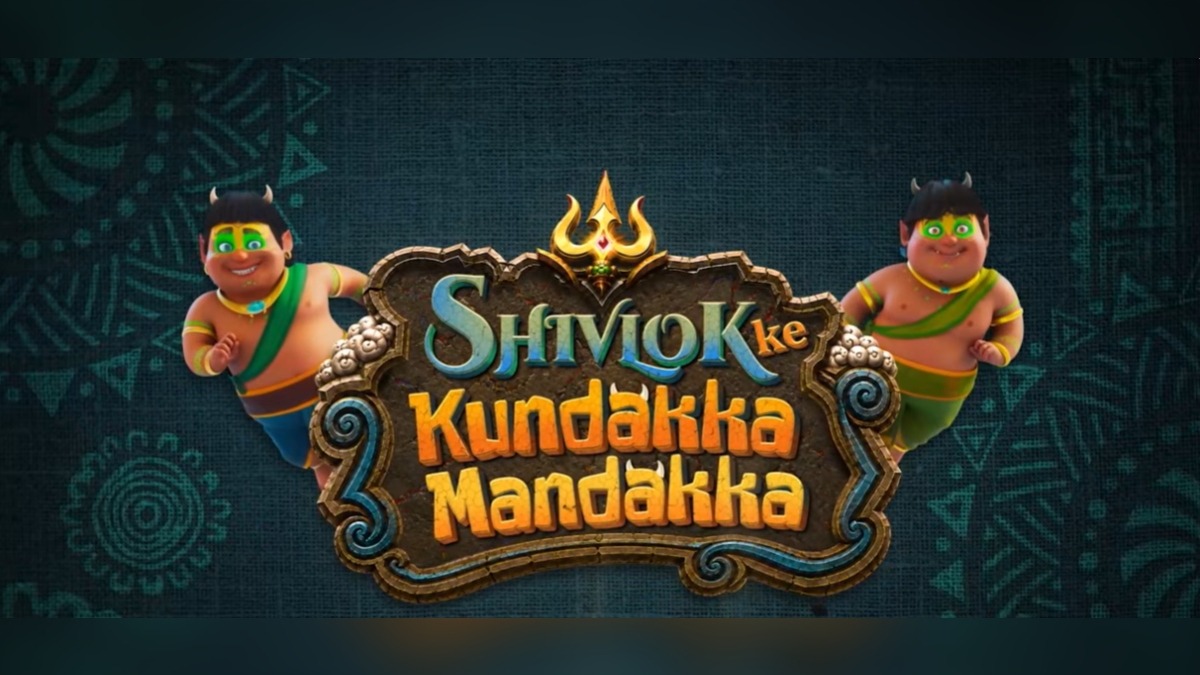 Production · animationxpress.com Zee5’s KidZ Platform Bets on Homegrown IP Franchise Potential Zee5 has released the trailer for its animated series Shivlok Ke Kundakka Mandakka, premiering July 17, as part of a wider effort to build a character-driven kids' ecosystem. The series, which focuses on mischievous asura twins, blends mythology with comedy to drive family co-viewing. If you are developing regional animation pipelines, this platform-level commitment to original IP shows that the domestic market is moving away from purely distributing global acquisitions toward financing localized content. |
906 open VFX roles on the platform Filter by craft, studio, country, or salary. Updated daily. |
| ▸ Jobs this week |  | 3D Hard Surface Artist Keywords Studios · Gurugram, India | Apply → |
|  | Production Data Analyst for Feature Animation Industrial Light & Magic · Vancouver, Canada | Apply → |
|  | Facial Performance Pipeline TD Digital Domain · Vancouver, Canada | Apply → |
|
| ▸ Featured reel |  | Patricia Palacín Lafuente |
|
| ▸ The Pulse: VFX Engine, this week | 906 open VFX roles | 987 resumes audited | 268 artist reels live |
|
|
Closing thought This week's developments highlight a major theme: automation and regional independence are restructuring our pipeline dependencies. Whether it is Beeble removing the manual pain of SDR-to-HDR grading or Indian studios moving from vendor-for-hire to IP ownership, the leverage is shifting. Survival in today's landscape requires both technical self-sufficiency and creative ownership. If you are relying on yesterday's workflows, you are already falling behind. Reply with the one manual pipeline task you are most desperate to see automated by deep learning. |
Priyank Murarka Founder, VFX Engine. |
|
How was this issue? Loved itIt was OKMeh |
